
Chinese Neurosurgical Journal Reveals LVIS Stent Changes Aneurysm Blood Flow
Researchers link LVIS-assisted coiling with high initial aneurysm occlusion and sustained reductions in blood-flow

Press Release Disclaimer: This is a press release distributed through the XPR Media network. It has not been independently verified by our newsroom.
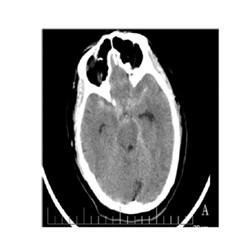

Researchers link LVIS-assisted coiling with high initial aneurysm occlusion and sustained reductions in blood-flow measures
CHINA, August 11, 2026 /EINPresswire.com/ — A retrospective study of 61 patients with wide-necked intracranial aneurysms found that LVIS stent-assisted coiling achieved complete initial occlusion in 80.0% of ruptured and 84.6% of unruptured aneurysms. In 14 patients analyzed with computational fluid dynamics, treatment substantially reduced aneurysm inflow and wall shear stress, with changes sustained at 6 months. Findings suggest potential hemodynamic benefits while highlighting thrombotic risks and the need for larger, prospective, comparative studies to confirm efficacy.
Intracranial aneurysms are weakened, bulging areas of cerebral arteries that can rupture, causing subarachnoid hemorrhage and, in turn, significant disability or death. While endovascular treatments have advanced significantly, wide-necked intracranial aneurysms present major challenges, as coils may move the parent artery during embolization. In such cases, stent-assisted coiling, which places a scaffold across the neck to stabilize coils, can be useful. One such device, the low-profile visualized intraluminal support (LVIS) stent, is a braided, self-expanding nitinol device with relatively high metal coverage. Beyond providing scaffolding, it may also alter blood flow inside the aneurysm and encourage thrombosis and healing. However, a thorough evaluation of its safety profile is still lacking.
Addressing this challenge, a research team led by Professor Xiang Xu from the Department of Neurosurgery at the Tangshan Gongren Hospital, China, evaluated whether LVIS stent-assisted coiling could provide effective aneurysm occlusion while producing measurable hemodynamic changes and maintaining procedural safety. The retrospective study included 61 patients with wide-necked intracranial aneurysms receiving LVIS stent-assisted coiling between January and December 2023: 35 had ruptured aneurysms and 26 had unruptured aneurysms. Researchers assessed immediate angiographic occlusion using the Raymond-Roy Occlusion Classification (RROC), functional outcomes using the modified Rankin Scale (mRS), follow-up angiography, parent artery patency, recurrence, and complications. A subset of 14 patients underwent computational fluid dynamics (CFD) analysis before treatment, after treatment, and at 6 months. This paper was published in Volume 12 of the Chinese Neurosurgical Journal on June 29, 2026.
Initial angiography showed complete occlusion (RROC class I) in 28 of 35 ruptured aneurysms (80%) and 22 of 26 unruptured aneurysms (84.6%). Angiographic follow-up was available for 27 patients (44.3%) at 6–12 months. All aneurysms initially completely occluded remained stably occluded, while some class II aneurysms improved to complete occlusion. In ruptured cases, favorable outcomes (mRS 0–1) increased from 57.1% at discharge to 77.1% at 3–6 months. Among unruptured cases, 25 of 26 patients (96.2%) had mRS 0–1 at discharge, and all surviving patients maintained favorable outcomes at follow-up.
CFD analysis showed that treatment reduced blood-flow activity within the aneurysm. In 14 patients, the amount of blood entering the aneurysm decreased after treatment, as did the proportion of the aneurysm exposed to higher flow and the average force exerted by blood on the vessel wall. These improvements remained significantly different from baseline at 6 months, with all P < 0.001.
“The sustained reduction in intra-aneurysmal flow parameters suggests that LVIS-assisted coiling can produce durable hemodynamic remodeling,” Prof. Xu noted, while emphasizing that the findings are observational rather than proof of causation.
The study also highlights procedural risks. Two patients with ruptured aneurysms experienced intraprocedural thrombosis and were successfully treated without permanent neurological deficits. Incomplete stent apposition was observed in 6 of 61 patients (9.8%). One patient with an unruptured aneurysm developed delayed in-stent thrombosis and died after unsuccessful rescue treatment and secondary cerebral hemorrhage, resulting in an overall procedure-related mortality of 1.6%.
“These findings underscore the importance of stent deployment and attention to thrombotic risk,” Prof. Xu said. The findings support collaboration among neurointerventional, imaging, and computational researchers to evaluate stent apposition and thrombotic risk prospectively to improve patient selection.
Overall, the findings suggest that LVIS stent-assisted coiling may combine mechanical support with flow modification for wide-necked intracranial aneurysms, while underscoring risks of stent thrombosis and incomplete apposition. Because the study was retrospective, single-center, clinically heterogeneous, and had a 44.3% angiographic follow-up rate, the authors caution against causal conclusions. Larger prospective, comparative studies will be needed to establish safety, efficacy, and the potential role of this approach across ruptured and unruptured aneurysms.
***
Reference
Title of original paper: Safety and hemodynamic efficacy of the LVIS stent in the endovascular treatment of intracranial wide-necked aneurysms: a single-center retrospective study
Journal: Chinese Neurosurgical Journal
DOI: 10.1186/s41016-026-00435-9
About Chinese Neurosurgical Journal
The Chinese Neurosurgical Journal is an international, peer-reviewed, open-access journal dedicated to advancing clinical practice and research across all areas of neurosurgery. As the official journal of the Chinese Neurosurgical Society, it publishes cutting-edge studies on neurosurgical techniques, neuro-oncology, cerebrovascular disease, trauma, spinal disorders, and emerging neuroscience trends. The journal emphasizes clinically relevant innovations that improve patient outcomes, surgical decision-making, and multidisciplinary care worldwide. Indexed in major databases including PubMed Central, Scopus, and DOAJ, it ensures high visibility and accessibility for global researchers and clinicians while promoting collaboration, education, and knowledge exchange across disciplines in neurological science. Website: https://cnjournal.biomedcentral.com/
About Professor Xiang Xu from Tangshan Gongren Hospital, China
Prof. Xiang Xu is a medical researcher and neurosurgeon in the Department of Neurosurgery at Tangshan Gongren Hospital, China. His clinical and research expertise focuses on endovascular treatment of intracranial aneurysms, vascular stenting, intracranial procedures, and neurosurgical hemodynamic analysis. He has contributed to peer-reviewed research evaluating intracranial stents, including the LVIS stent, and investigating their hemodynamic efficacy and clinical applications in neurosurgery. Through his clinical practice and research, he works to advance minimally invasive approaches for cerebrovascular disorders and improve the understanding of treatment outcomes. His work bridges neurosurgical practice, endovascular intervention, and cerebrovascular hemodynamics to support improved patient care.
Funding information
The project “Analysis of the association between hemodynamic changes and recurrence after endovascular treatment of cerebral aneurysms” (ethics approval No. GRYY-LL-KJ2022-K5) was funded by the Hebei Provincial Department of Science and Technology (Provincial Science and Technology Program, 2022).
Yi Lu
Chinese Neurosurgical Journal
+861059978478 ext.
luyi617@sina.cn
Legal Disclaimer:
EIN Presswire provides this news content “as is” without warranty of any kind. We do not accept any responsibility or liability
for the accuracy, content, images, videos, licenses, completeness, legality, or reliability of the information contained in this
article. If you have any complaints or copyright issues related to this article, kindly contact the author above.

Media gallery

