
Doctor Octopus Is Becoming Real: The Rise of Soft Embodied Intelligence
SHENZHEN, China, Aug. 13, 2026

Press Release Disclaimer: This is a press release distributed through the XPR Media network. It has not been independently verified by our newsroom.
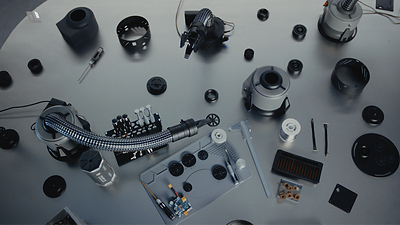

Doctor Octopus Is Becoming Real: The Rise of Soft Embodied Intelligence
PR Newswire
SHENZHEN, China, Aug. 13, 2026
SHENZHEN, China, Aug. 13, 2026 /PRNewswire/ — Feagine Robotics today announced Fi0, a cross-embodiment foundation model that keeps a robot’s task knowledge intact when its body changes. Released alongside three tendon-driven biomimetic manipulators, FEAGINE A series A01, A02, and A03, Fi0 gives researchers and developers a single model that works across bodies of different lengths, segment counts, and degrees of freedom.
Fi0 stands for Foundation Intelligence Across Embodiments, Feagine’s first-generation cross-embodiment foundation model. The three Biomimetic Manipulators — FEAGINE A01, A02, and A03 — increase in segment count, reach, and payload.
With the manipulators, Feagine sets out what kind of body a robot can have. Fi0, the model they share, asks whether the intelligence a robot has already acquired survives a change of body.
Individually, A01, A02, and A03 are three soft robots that differ in length, segment count, degrees of freedom, and payload. Placed on the same roadmap as Fi0, they become a set of controlled embodiment variations. The body grows longer, the segments multiply, and the reachable workspace, the path of motion, and the way contact is made all change with them. What the model has to work out is which part of that belongs to the task and the world, and which part is decided by the body.
Hardware and model evolve together on this route. Feagine calls it soft embodied intelligence.
Designing beyond the humanoid form
The robot body is becoming the most overlooked variable in embodied intelligence.
Humanoid robotics has drawn enormous capital on a simple premise. The world was built for human bodies, so a robot shaped like one could walk into any building people already use. That same generality concentrates the hardest problems in robotics into a single body. Dynamic balance, high-degree-of-freedom control, dexterous manipulation, collision safety, energy efficiency, and generalization in open environments all have to hold at once, in the same system.
As robots move out of the lab, another question is surfacing. Does a general-purpose robot need a general-purpose body?
Speaking on Andreessen Horowitz’s podcast in July, Fei-Fei Li made a point that sits close to engineering reality. Evolution shaped the human body for open, unstructured environments. Where a task’s boundaries are clear enough, though, the most efficient body may evolve in an entirely different direction. A creature that only climbs trees will not evolve a human body.
Feagine started there. The company did not begin by copying a human body. It began by treating the body as a variable that can be redesigned.
In robotics, “soft” usually points first to materials and mechanical structure. Soft robots, continuum robots, and tendon-driven robots use elastic bodies, continuous bending, or compliant actuation to reach a richer range of configurations, conforming to their surroundings, wrapping around objects, and reducing the risk that comes with rigid collisions.
Soft embodied intelligence takes that idea further. Its physical basis is a continuously deformable, contact-compliant body, and the structural parameters, real-time shape, sensing, and actuation of that body all enter the model’s context. Task knowledge and world understanding can then be reused across different bodies, while the model generates actions fitted to the body it is currently controlling.
In Feagine’s view, soft bodies widen the range of close-range human interaction and complex motion, and continuous configuration opens a new basis for data mapping and cross-embodiment generalization.
Feagine points to three conditions for robots entering the spaces where people live: a body people are comfortable around, data in sufficient variety, and a model that generalizes.
Feagine is not arguing against humanoids, but for a different market structure, one in which robots have many different bodies, generality comes from shared intelligence, and each body is more efficient at what it was built for.
The world’s first production family of tendon-driven soft bodies
Feagine A01, A02, and A03 form the first tendon-driven soft manipulator family delivered in standardized volume production. The three models scale through segment count, degrees of freedom, length, and payload, each matched to a different deployment profile.
A01 uses one flexible segment and 2 degrees of freedom, weighs 750 g, and carries a 200 g payload. It suits mobile chassis, inspection equipment, and other weight-sensitive platforms, handling light manipulation in confined spaces.
A02 adds a second segment and 4 degrees of freedom, with an arm length of 30 cm, a 400 g payload, and a top speed of 0.78 m/s. A larger workspace and continuous bending open it to benchtop manipulation, close-range service, work in narrow spaces, and tasks that call for compliant contact.
A03 goes to three flexible segments and 6+1 degrees of freedom, with an arm length of 50 cm, a 600 g payload, and a top speed of 1.17 m/s. The additional segments give it a larger configuration space, letting it route around obstacles, approach a target from awkward angles, and take on longer-reach, higher-DOF work.
All three support ROS 1, ROS 2, Python, and C++; A02 and A03 also ship with a GUI and MuJoCo and SAPIEN environments. From mobile manipulation and close-range service to grasping and interaction in complex spaces, Feagine is turning the biomimetic manipulator from a laboratory research instrument into a standard robot body that can be integrated and deployed directly.
For Fi0, A01, A02, and A03 matter for a second reason.
As length, segment count, and degrees of freedom change, the same task naturally produces different paths of motion, body configurations, and modes of contact. A short arm can approach the target directly. A longer arm with more segments can use configuration redundancy to route around an obstacle. A dual-arm or multi-arm system may reorganize the division of work within the task altogether.
The task itself stays fixed. What changes, systematically, is how the body gets it done.
A01, A02, and A03 are not just three SKUs. They give Fi0 a real, continuous, repeatedly verifiable set of embodiment differences. Every additional length, segment count, and configuration gives the model one more sample for understanding how a change of body changes the action.
Fi0: Foundation Intelligence Across Embodiments
Learning robot skills from context, understanding the physical world, and adapting actions to different bodies.
Fi is Feagine’s long-term research direction in Foundation Intelligence, and Fi0 is the first-generation cross-embodiment model developed under it. Fi0 rests on a basic premise: what a robot understands about a task and about the physical world should stay reusable across bodies. What has to change with the body is the action.
When the task is placing a cube into a bowl and the robot changes from an A01 to an A03, or from a single arm to a dual-arm configuration, the task itself is not redefined. The relationships between the objects, the contact logic of grasping and releasing, the order in which the task advances, and the final success state all remain reusable. What has to be reorganized is the reachable workspace, the dimensionality of the action, the path of motion, the configuration of the body, and the dynamic outcomes that follow.
Fi0 carries task intent, object relationships, contact logic, and goal states across different bodies, then generates actions suited to the robot in hand, conditioned on its morphology, sensing, actuation, and dynamic state.
Crossing bodies is only half of what Fi0 sets out to solve. Tasks in the real world are not exhausted at training time either. For a task outside what training covered, a person can give a single demonstration, and Fi0 takes it as skill context at inference time. No parameters are retrained for that task.
Fi0’s capability grows in two directions at once, taking in new skills through context and re-expressing existing ones across different bodies.
Language, vision, human demonstration, world state, and embodiment information together form Fi0’s context. Language gives the objective and its semantic conditions. A demonstration supplies a specific skill when one is needed. Vision and the world representation describe what is happening in the environment. Embodiment information tells the model what body it is controlling. A task may come from what pretraining gave the model, or arrive through context during use; at execution, actions are generated from the current world and the current body.
Around this chain, Fi0 builds representations of skill, world, body, and the consequences of action. The Skill Encoder turns a human demonstration into skill context the model can call on. The Cross-view World Encoder learns a shared physical world from different observation viewpoints. The Embodiment Graph brings robot structure and real-time state into the model. The World Dynamics Model and MAWA predict and evaluate the futures different actions would produce.
All of it serves one goal: letting a robot acquire new skills during use, and keep drawing on the task and world knowledge it has already accumulated after its body changes.
Learning skills from context
The scope of robot foundation models keeps widening, but the world is wider still. Objects, task sequences, and skill combinations of the real world cannot be enumerated in advance at training time. The conventional fix is to turn each new capability into data: collect demonstrations, train or fine-tune, redeploy. Once robots are working in factories, laboratories, and homes, that chain only gets heavier, and for models running on-device, frequent parameter updates in the field are hard to sustain as everyday practice.
Fi0 moves part of this adaptation to inference time.
For tasks it already knows, the model acts directly. For a skill outside what training covered, a person performs a single demonstration first. Fi0 takes it as skill context for the task at hand and extracts the objects involved, the order of the task, the critical contacts, and the goal state. It then generates actions from that, together with the current environment and the robot’s own embodiment conditions. No parameters are updated.
A new skill therefore does not have to enter a training set and wait for the next model update. A robot arrives with the general capabilities it already has, and picks up what a particular task needs through context when that task falls outside them.
This gives embodied intelligence another way to expand. The foundation model keeps widening what it can complete directly, while in-context learning takes on the long tail that keeps appearing in real settings. As the model improves, fewer tasks will need an extra demonstration, but the channel for taking in a new skill during use stays open.
Robots can enter the real world before training has covered every possible task.
One world, many views
Humans and robots almost never observe a task from the same position.
A human demonstration usually comes from a head-mounted first-person view, while a robot may perceive its environment through a wrist, body, head, or external camera. Change the camera position, the field of view, or the pattern of occlusion, and the same object can look entirely different in pixel space.
The physical process they capture is nevertheless the same. The cube holds the same position and state, grasping and releasing follow the same rules of contact, and the task advances through the same stages. Fi0 has to see past the surface differences of the image and recognize the single world behind both viewpoints.
Fi0 handles this with the Cross-view World Encoder. The human first-person view and the robot’s view are each encoded visually, then aligned through cross-view prediction and representation alignment to learn a shared world representation: object and robot state, spatial relationships, contact events, task progress, and future dynamics.
This representation is what connects human experience to robot execution. Seeing that the cube has been grasped from a human first-person view, the model has to recognize the same physical state from a robot wrist view. Experience the robot gains in real execution, of slipping, collision, and contact, then goes back into how the model reads human demonstrations.
What Fi0 ends up with is not the visual features of any one viewpoint but a shared representation of what is happening to the objects and the interaction. Only with this shared world in place can the experience held in a human demonstration cross cameras and bodies and actually be reused by the model.
Demonstrations as context
What a human demonstration provides is far more than a hand trajectory.
A person reaches for the cube and picks it up. The video catches more than the hand: which object was chosen, how it was approached, when contact was made, and what state counted as done. The hand’s path is just how that skill looks on a human body. What transfers to another body is the structure underneath.
The Skill Encoder turns a demonstration into skill tokens: what changes about the objects, what stages the task moves through, when the contacts that matter happen, and what the end state looks like. The demonstration becomes skill context at inference time, and the model generates actions from it together with the current environment and the robot’s own embodiment.
Crossing bodies depends on separating what the task requires from how one body carried it out. The second rarely transfers: human hands, rigid arms, soft arms, and dual-arm systems have different structures and different action spaces, and a human trajectory rarely converts into control commands for any of them. The first does: the intent, the contacts, the stage transitions, and the goal state hold across all of them.
Fi0 keeps the structure of how a skill holds together. The robot at hand decides how to carry it out. One demonstration can serve several kinds of robot at once: they share the skill, then execute according to their own length, configuration, sensing, and actuation.
This changes what human data is worth. A demonstration does more than supply raw material for robot training trajectories. It becomes something the model can call on at inference time, which means one piece of real-world experience can be reused, by different robots, more than once.
Controlling the body is not the same as understanding it
Beyond understanding the task, a cross-embodiment model has to know what kind of body it is controlling.
The usual approach is a Robot ID: label each robot and switch policies accordingly. That tells machines apart. It does not say why an A01 is like an A02, what one more segment does to the reachable workspace, or how an action should change when the arm gets longer.
Fi0 represents a robot as a structured Embodiment Graph and passes it through a Graph Encoder to produce Body Tokens. Topology, segments, scale, morphology, modes of sensing, actuation, and dynamic state all enter this representation, and take part in action generation and future prediction alongside language, vision, skill, and world state.
What Fi0 faces is not a set of isolated robot models but a space of bodies with structural relationships running through it.
When the segment count grows, the length changes, or the end effector is swapped, the model can adjust its actions to the body it has. Single-arm, dual-arm, multi-arm, long, short, and the various segment combinations stop being discrete device categories and become a family of bodies that can be learned together.
Soft robots enlarge the problem further. Most rigid robots let the mechanical structure be treated as a relatively stable constant within a single execution, while a soft body deforms continuously with motion, load, and contact. The state of the body becomes part of the state of the world, and the model has to understand both the environment outside it and what is happening to itself.
This is why Feagine chose soft robots as Fi0’s core research platform. Length, segments, shape, and configuration can all vary continuously, letting the model observe more directly how body parameters change the reachable workspace, the way contact is made, and the outcome of an action.
In a continuously varying space like this, Fi0 learns which knowledge carries across bodies and which actions have to change with them. Its real reach is not confined to A01, A02, and A03, but extends to a wider range of robot structures.
Before the action
Having understood the task, the world, and the body, a robot still faces the question that decides success or failure: where will this action take the world?
For a soft body, one goal usually corresponds to several body configurations and several paths of motion. All of them may be geometrically reachable, but they produce different contact states, different body shapes, and different task outcomes. A path that looks reasonable can knock the object off course, or leave the robot in a configuration that makes the next step harder.
Fi0 does not execute a single action outright. It first generates a set of candidates for the body it currently has. The robot’s length, degrees of freedom, real-time shape, and reachable workspace together bound what it can do at that moment, and once the body changes, so do the candidates.
Those candidates pass to the World Dynamics Model. Starting from the current world state, it rolls each action forward over a number of future time steps and predicts what would change: object states, contact relationships, task progress.
The predicted futures then go to Multi-objective Action-World Assessment (MAWA), which scores them on how far the task advances, how likely it is to succeed, how much physical risk it carries, and how uncertain the model is. The next action follows from those scores.
Fi0’s understanding of the physical world does not stop at perception; it takes part in the decision itself. What contact an action would make, whether the task can keep moving forward, and how much risk the current body carries on that path all feed into the choice.
The same skill produces entirely different action plans on an A01 and an A03. The A01 may favor shorter, more direct paths; the A03 can use its extra segments to form different body configurations. The World Dynamics Model predicts the futures each would produce, and MAWA picks the one better suited to the task and the body at hand.
Fi0’s chain of action closes here. Skill context defines the task, the shared world representation describes the physical state, and Body Tokens supply the conditions of the body. From there the World Dynamics Model predicts what each candidate would lead to, and MAWA chooses among them.
Toward cross-embodiment foundation intelligence
Fi0 organizes task, world, body, and action into a single framework. Language and human demonstrations define the task; the shared world representation describes the current physical state; embodiment information bounds what the robot can do; future prediction estimates what each action would lead to.
The framework also lets experience accumulate beyond a single body.
What the model has already learned carries over to other robots: how tasks are structured, how objects relate, how contact behaves. New bodies widen the range of conditions it has seen. The successes, failures, contacts, and recoveries that come out of real execution keep adding to what it knows about consequences. For a task training never covered, a demonstration puts a new task within reach at inference time.
Soft bodies give this a testbed that varies continuously. A01, A02, and A03 form a progression along length, segment count, and degrees of freedom. The model can watch how those parameters feed through to the reachable workspace, the path of motion, the way contact is made, and the final outcome. From that it builds a more detailed picture of how task knowledge relates to the body running it.
None of this is confined to soft robots. Manufacturing, logistics, healthcare, homes, space, and extreme environments will call for robots of very different shapes, and much of what is known about tasks and about the physical world still carries across them. What changes is how each body gets the task done.
The same skill, on an A01, an A03, a dual-arm system, or another robot, can take entirely different trajectories, body configurations, and contacts while pointing at the same goal.
Foundation Intelligence Across Embodiments means this: the body can change, while skill and an understanding of the world keep accumulating and come out differently on each body that runs them.
The next contest in embodied intelligence may be between bodies
Humanoid robotics is trying to find a body general enough for general intelligence. Feagine is asking a different question: as robots come to have more and more different bodies, can the intelligence they have already acquired keep accumulating across them?
The question gets more pressing the further robots move into industry. Factories, warehouses, hospitals, homes, and extreme environments demand different things from a robot, whether in scale, payload, speed, precision, compliance, or safety. Bodies will keep specializing. What the industry has to solve is not only which form is most general, but how to avoid paying for data, training, and adaptation all over again every time a new body appears.
Feagine’s route runs in that direction. A01, A02, and A03 push the soft body into a standardized product line; data keeps bringing in new tasks and new real-world experience; Fi0 organizes task, world, and body into one foundation model, so that a skill can produce new actions as the body changes.
What Feagine is really building is an expanding map between tasks, bodies, and the physical world.
Soft embodied intelligence means more than soft mechanics. A body can change its length, segments, shape, and configuration around a task, while intelligence accumulates on top of those changes and lets one skill find an action that holds on each different robot.
The humanoid route keeps widening what a single general body can do. Feagine’s is no less ambitious in the other direction, loosening general intelligence from any one body.
As the robot world goes from one body to many, the capability that compounds is the one that lets every new body inherit what came before.
Link to media kit: https://drive.google.com/drive/u/1/folders/1kbcKJjk1vAEf4mFGhwbNkZr46JwnNJkE
Watch Feagine Robotics introduction video: https://youtu.be/0up_2RahO5A
Follow Feagine Robotics
LinkedIn: https://www.linkedin.com/company/feagine-robotics
YouTube: https://www.youtube.com/@FeagineRobotics
X: https://x.com/FeagineRobotics
About Feagine Robotics
Feagine builds flexible robot bodies and foundation intelligence that learns from the real world and adapts across embodiments. Learn more at feagine.com/en
CONTACT: Feagine Robotics, Julie Wang, julie@feagine.com, 1-6072627242
 View original content to download multimedia:https://www.prnewswire.com/news-releases/doctor-octopus-is-becoming-real-the-rise-of-soft-embodied-intelligence-302850847.html
SOURCE Feagine Robotics


