Madagascar’s Golden-crowned Sifaka Named Among 100 Species Selected for Recovery by the Phoenix Species Project
The selection of one of Madagascar's rarest lemurs shines a spotlight on the Loky-Manambato region and on the

Press Release Disclaimer: This is a press release distributed through the XPR Media network. It has not been independently verified by our newsroom.
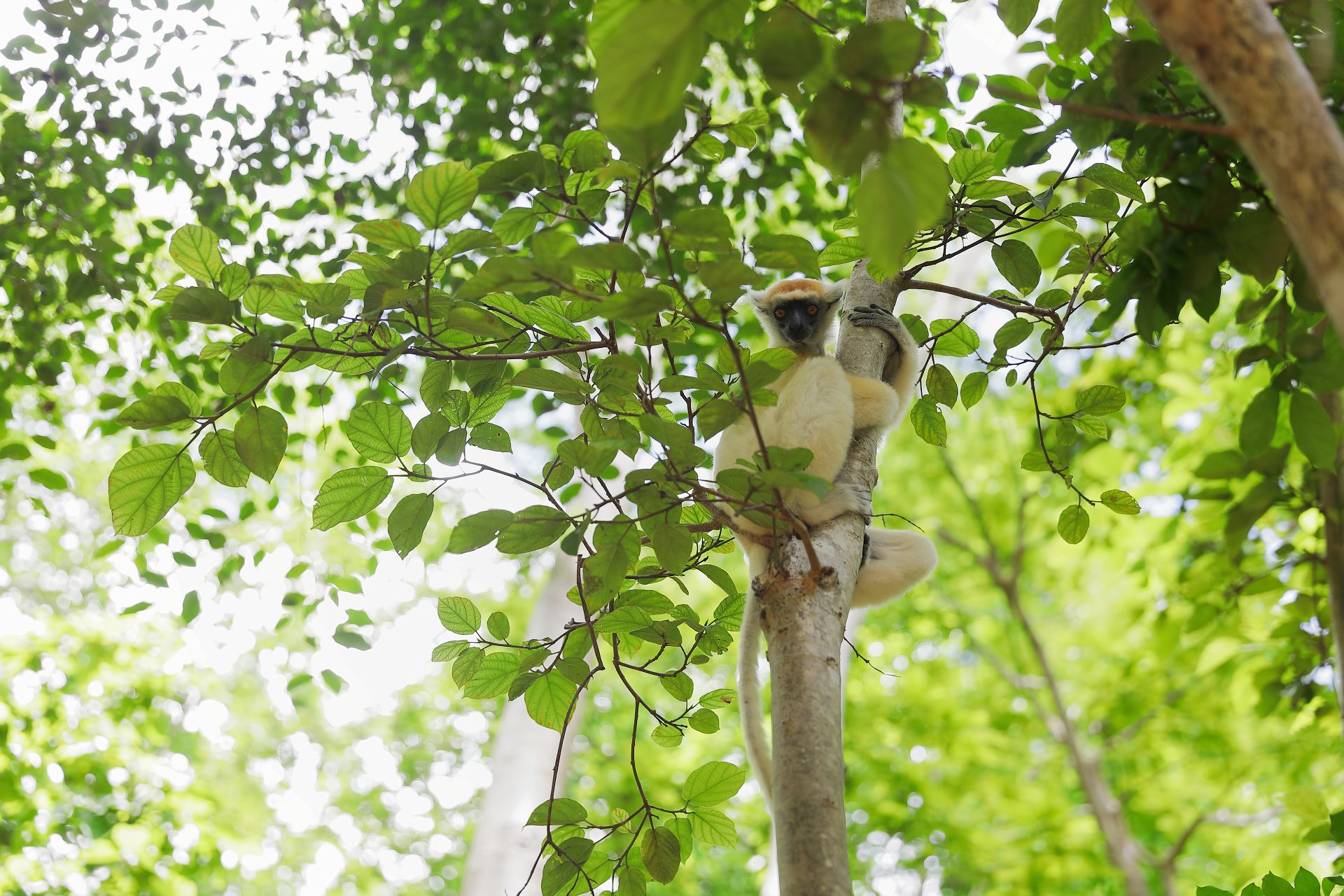

The selection of one of Madagascar’s rarest lemurs shines a spotlight on the Loky-Manambato region and on the nationally-led efforts underway to protect it.
ANTANANARIVO, MADAGASCAR, August 13, 2026 /EINPresswire.com/ — One of Madagascar’s most iconic and critically endangered lemurs, the Golden-crowned Sifaka (Propithecus tattersalli), has been named among 100 species selected for recovery by the Phoenix Species Project, a landmark $200 million initiative launched by the Bezos Earth Fund and Leonardo DiCaprio’s Re:wild. The selection is both a recognition of the species’ global significance and a powerful endorsement of the community-conservation work already underway in Madagascar’s northern dry forests.
The Golden-crowned Sifaka is found only in the Loky-Manambato region of northern Madagascar, with an estimated wild population of around 10,000 individuals. Given more than 40 tree species make up its diet, the Golden-crowned Sifaka is an essential seed disperser and a keystone of the dry forest ecosystem: its recovery is inseparable from the recovery of the forests themselves. The species faces severe pressure from deforestation driven by agriculture, mining, timber, and charcoal production, as well as poaching. The Loky-Manambato region was identified as a high-priority extension area in the March 2026 scientific workshop that forms the backbone of Madagascar’s 30×30 Biodiversity Plan.
“Getting global recognition for the Golden-crowned Sifaka is something we have worked toward for years,” said Tiana Andriamanana, Executive Director of Fanamby and Terrestrial Lead of Madagascar’s 30×30 Biodiversity Plan. “But the real story here is connection: the Sifaka grows the forest, and the forest sustains the people who live alongside it. Local communities are the true foundation of conservation work – they always have been. This moment is exciting because it brings us one step closer to securing the resources these communities and this ecosystem have long deserved.”
Association Fanamby has led on-the-ground conservation efforts in the Loky-Manambato region for years. With support from the Phoenix Species Project, Fanamby will now scale that work – restoring and reconnecting severely fragmented dry forest habitats, working with local communities to reduce threats, and co-managing those habitats alongside the people who call them home. As the Sifaka population recovers and begins dispersing seeds across the forest canopy, the broader ecosystem will follow, creating lasting ecotourism and livelihood opportunities for local communities, and contribute to the nation’s 30×30 biodiversity plan and to planetary health.
“The Phoenix Species Project is built on a simple belief: with the right people and resources, we can recover species from the brink of extinction,” said Wes Sechrest, Founder and CEO of Re:wild. “Fanamby embodies exactly the kind of partner we look for – a community-rooted organization on the frontlines, making not just conservation but the long-term survival of a species a reality.”
The selection of the Golden-crowned Sifaka by the Phoenix Species Project is the latest milestone in a remarkable 18-month arc for Madagascar’s conservation effort. In February 2026, the government designated 21 new protected areas covering 1.82 million hectares, bringing the national total to 8.88 million hectares. In March, 70 scientists, the majority Malagasy, completed the country’s first full scientific re-prioritization of terrestrial biodiversity since 1995, identifying 956 priority areas including Loky-Manambato as a high-priority extension. Re:wild was among the co-funders of that scientific workshop. In April, Prime Minister Mamitiana Rajaonarison formally committed his government to the 30×30 plan before conservation partners and funders in Washington DC.
“The Loky-Manambato region being identified as a high-priority area in our scientific workshop, and now the Golden-crowned Sifaka being named by the Phoenix Species Project, shows how everything in Madagascar’s 30×30 plan is connected: the science, the species, the communities, and the global partnerships that make it possible,” said Alain Liva Raharijaona, 30×30 Coordinator at Madagascar’s Ministry of Environment and Sustainable Development. “This is exactly what a nationally-led conservation plan, built with local partners and supported by global partners, looks like in practice.”
Madagascar covers just 0.4% of the world’s land but holds 5% of all species on Earth, 90% of which exist nowhere else. The 30×30 Biodiversity Plan targets 18 million hectares of terrestrial ecosystems and 40 million hectares of ocean under strengthened protection by 2030, benefiting more than three million people. The plan is backed by a self-financing strategy including carbon credits, debt-for-nature swaps, and ecotourism, with key funders including the Hempel Foundation, Conservation Allies, Rainforest Trust, KfW, AFD, and the World Bank.
Click here to download images of the Golden-crowned Sifaka
About Association Fanamby
Fanamby is a Malagasy non-profit organization that protects 590,000 hectares of Madagascar’s marine and terrestrial protected areas by combining community-led conservation with sustainable economic development. Fanamby’s work focuses on protecting threatened flagship species and their habitats through enhanced protection measures, ecological monitoring, and habitat restoration. Species under Fanamby’s protection include the Perrier’s Sifaka, Madame Berthe’s Mouse Lemur, Indri, and the Golden-crowned Sifaka. www.fanamby.org
About Madagascar’s 30×30 Biodiversity Plan
Madagascar’s 30×30 Biodiversity Plan is a nationally-owned, science-based, and costed strategy to protect 30% of the country’s terrestrial and marine areas by 2030. In February 2026, Madagascar designated 21 new protected areas covering 1.82 million hectares, bringing the national total to 8.88 million hectares. Three pilot conservation landscapes are already operational. The plan targets $150-220 million mobilized annually for conservation financing. Developed with the support of SPACES, Campaign for Nature, the High Ambition Coalition for Nature and People (HAC), Rainforest Trust, Re:wild, and other partners. www.madagascar30x30.com
Rose Olwell
Campaign for Nature
email us here
Legal Disclaimer:
EIN Presswire provides this news content “as is” without warranty of any kind. We do not accept any responsibility or liability
for the accuracy, content, images, videos, licenses, completeness, legality, or reliability of the information contained in this
article. If you have any complaints or copyright issues related to this article, kindly contact the author above.

Media gallery