Evolve Collision Centers Publishes August Guide to Hidden Damage After a Collision
Ardmore, PA - August 31, 2026 - PRESSADVANTAGE - Evolve Collision Centers has published an August consumer guide

Press Release Disclaimer: This is a press release distributed through the XPR Media network. It has not been independently verified by our newsroom.

Ardmore, PA – August 31, 2026 – PRESSADVANTAGE –
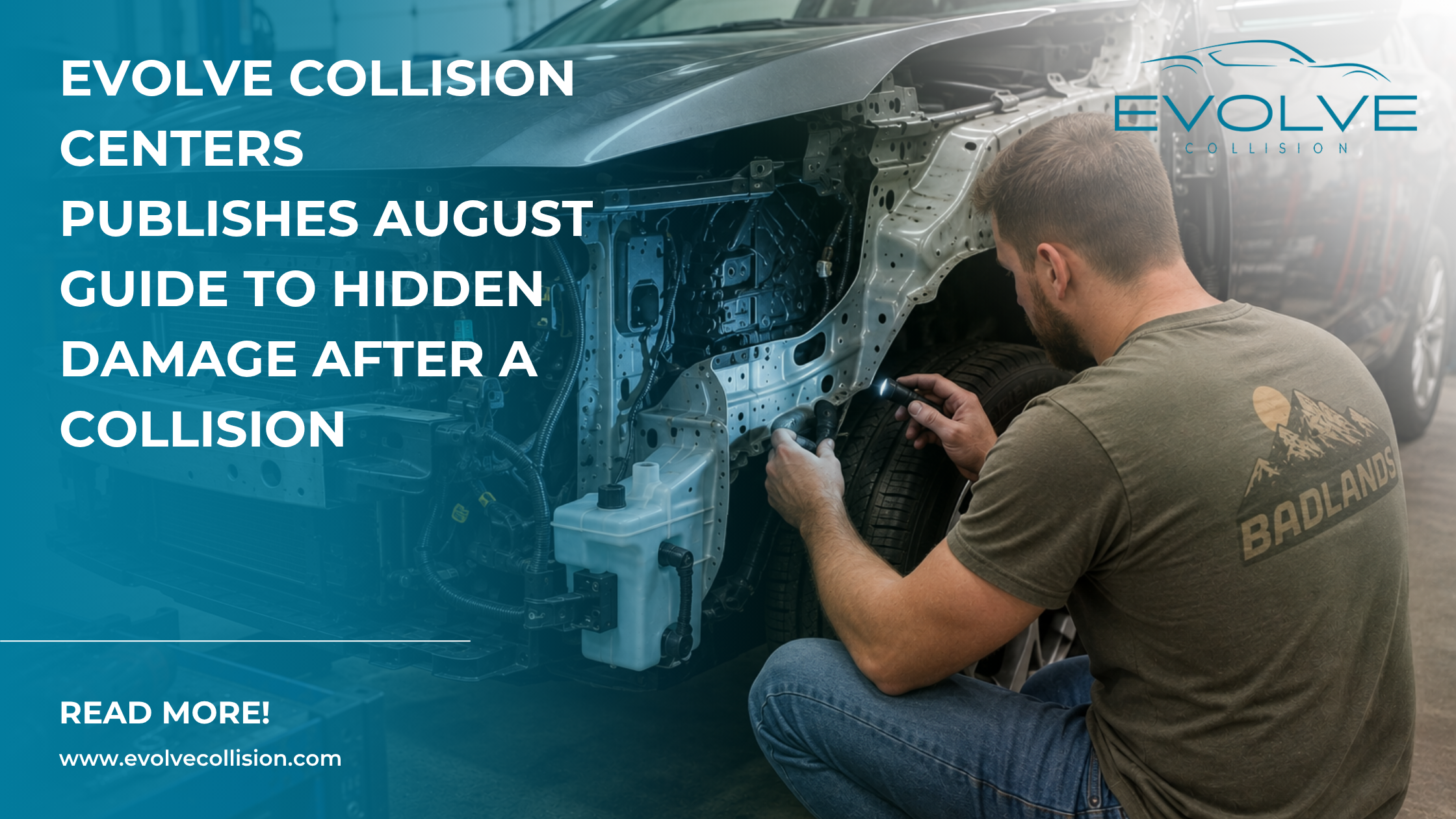
Evolve Collision Centers has published an August consumer guide explaining how collision-related damage may extend beyond what is immediately visible during an exterior inspection. The new resource focuses on covered components, access during repair planning, vehicle-specific manufacturer procedures, and technology positioned near collision-affected areas.
The guide was developed to give vehicle owners a clearer understanding of why an initial inspection and a completed repair plan can contain different levels of information. It also addresses a common misconception surrounding the term “hidden damage.” Less-visible damage is possible after a collision, but it should not be assumed to exist without evaluation and documentation.
The August publication adds a dedicated hidden-damage resource to Evolve Collision Centers’ existing consumer information about the collision repair process.
After a collision, exterior damage may be visible on a bumper cover, fender, door, hood, quarter panel, liftgate, lamp, glass, or another component. Documenting these conditions helps establish the location and apparent effects of the impact.
Some exterior components, however, can limit access to areas positioned behind them. Bumper covers, lamps, trim, liners, and body panels may cover brackets, mounting points, reinforcements, absorbers, wiring, fasteners, and adjacent components.
The new guide explains that these covered areas are one reason an exterior inspection cannot always provide the same information as later stages of repair planning. When appropriate component removal provides additional access, technicians can evaluate areas that were not fully visible initially.
If additional collision-related conditions are identified, those findings can be documented and incorporated into the repair plan. This does not mean that disassembly will reveal additional damage after every accident. Instead, it provides an opportunity to evaluate previously inaccessible areas when the circumstances of the repair call for it.
A bumper assembly provides one example of how visible and covered components can differ.
Depending on the vehicle, a modern bumper can consist of more than the painted exterior cover visible to the vehicle owner. Components positioned in or behind the assembly can include energy-absorbing material, reinforcement structures, brackets, retainers, fasteners, wiring, sensors, and mounting locations.
A damaged bumper cover therefore provides useful information about an impact but does not independently establish the condition of everything positioned behind it.
The same principle can apply to other collision-affected areas. Damage involving a door, fender, quarter panel, or liftgate may require evaluation of attachment locations or adjacent components when those areas are relevant to the impact.
Rather than predicting additional damage from the location or appearance of an impact, the guide explains how repair professionals can move from visible observations to documented findings as appropriate areas become accessible.
Modern vehicle construction adds another consideration to the evaluation process.
Vehicles can incorporate different grades of steel, aluminum, plastics, composites, adhesives, and other materials. Components that appear similar externally can therefore have different construction characteristics and repair requirements.
Manufacturer repair information can provide technical direction for a particular vehicle and repair operation. Depending on the affected component, this information may address repairability, replacement procedures, joining methods, attachment locations, measurements, corrosion protection, and other considerations.
These differences help explain why visually similar collisions do not necessarily result in identical repair plans. Vehicle construction, component design, impact location, and documented conditions can influence the procedures applicable to an individual repair.
The August guide also addresses electronic technology located within or near exterior vehicle components.
Depending on the vehicle, cameras, radar units, parking sensors, wiring, and other equipment associated with advanced driver-assistance systems may be located in bumpers, mirrors, windshields, lamps, and other areas that can be affected during a collision.
An impact near one of these components does not automatically establish that the system is damaged or that a specific procedure is required. Similarly, the absence of a dashboard warning does not by itself determine the condition of every system.
Applicable scanning, calibration, initialization, or other requirements depend on the individual vehicle, affected systems, repair operations, and manufacturer information.
Evolve Collision Centers provides further consumer information about these considerations through its scanning and calibration resource.
The new publication also clarifies that hidden damage should not be understood exclusively as major structural damage.
Less-visible collision-related conditions can involve localized components such as brackets, fasteners, mounting points, bumper components, wiring, or other parts covered by exterior surfaces. At the same time, visible exterior damage should not be used to assume that any of these conditions are present.
Evaluation and documentation are necessary to establish what was actually affected. This distinction gives consumers a more precise understanding of hidden damage without suggesting that every collision is more severe than it initially appears.
The guide also connects less-visible damage with the development of collision repair documentation.
An initial estimate reflects information reasonably available during the first evaluation. When additional access provides new documented information, the repair plan can be updated to account for collision-related conditions that could not previously be evaluated.
Manufacturer research can also identify vehicle-specific procedures associated with the documented repair. This progression helps explain why an initial estimate and the eventual repair plan can differ without implying that the original assessment was inaccurate.
The August resource further distinguishes newly identified collision damage from normal repair requirements. Not every operation added during repair planning represents previously concealed damage. Some procedures may be associated with the component being repaired or replaced and the manufacturer information applicable to that work.
For vehicle owners, understanding this distinction can make conversations about estimates, supplements, component replacement, repair procedures, and timelines easier to follow.
Evolve Collision Centers’ August guide brings these considerations together into a more defined consumer framework. Its central point is that exterior appearance provides useful information after an accident, but a developed repair plan reflects documented conditions on the individual vehicle and applicable repair information.
The publication is intended as consumer education rather than a diagnostic standard. Determining whether a particular vehicle has collision damage that was not visible initially requires evaluation of that vehicle and the affected areas.
Additional information about restoring collision-damaged exterior components is available through Evolve Collision Centers’ auto body repair resource.
Evolve Collision Centers serves vehicle owners from its facility at 2560 Haverford Rd, Ardmore, PA 19003.
About Evolve Collision Centers
Evolve Collision Centers provides collision repair and related automotive repair services, including auto body repair, paintless dent repair, refinishing, auto glass work, vehicle scanning and calibration, and OEM-certified repair capabilities. The company serves vehicle owners in Ardmore and surrounding Main Line communities.
###
For more information about Evolve Collision Centers, contact the company here:
Evolve Collision Centers
Butch Cantz
(267) 692-6699
bcantz@evolvecollision.com
2560 Haverford Rd, Ardmore, PA 19003