
Wenzl’s Collision Center Publishes Guide to Paintless Dent Repair Limitations
Lincoln, NE - August 31, 2026 - PRESSADVANTAGE - Wenzl's Collision Center has published a new consumer guide explaining

Press Release Disclaimer: This is a press release distributed through the XPR Media network. It has not been independently verified by our newsroom.
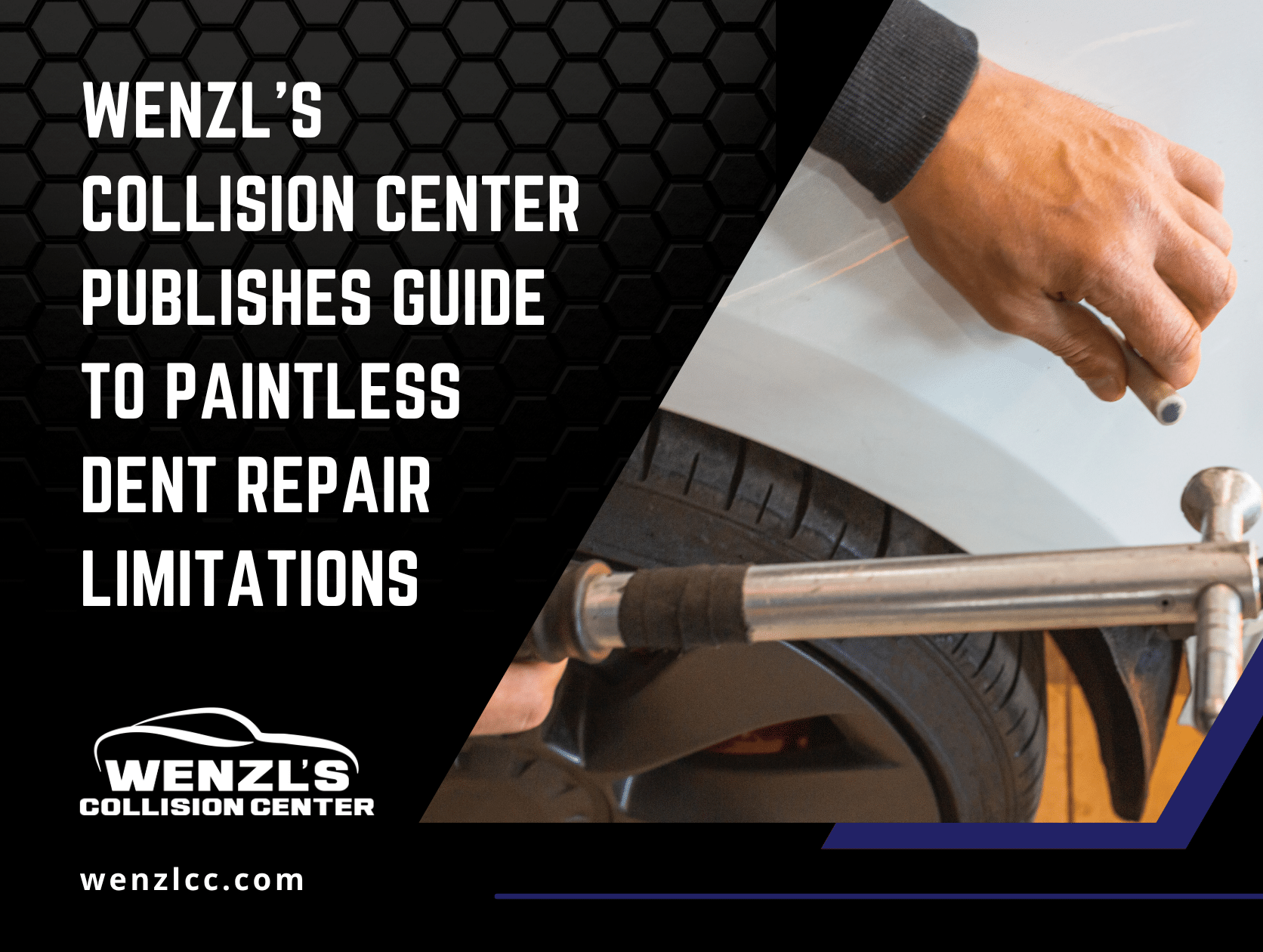

Lincoln, NE – August 31, 2026 – PRESSADVANTAGE –
Wenzl’s Collision Center has published a new consumer guide explaining conditions that can limit the use of paintless dent repair and why dents that appear similar may ultimately involve different repair approaches.
The August resource expands the company’s existing paintless dent repair information with a specific focus on the limitations of the technique. The guide organizes the subject around four factors that can affect whether PDR is considered for a damaged area: paint condition, dent characteristics, accessibility, and construction of the affected component.
Paintless dent repair, commonly known as PDR, is a repair technique used to reshape qualifying dents while retaining the existing painted finish. When the condition of the panel supports the process, repairing the affected area may not require the sanding, body filler, and refinishing associated with conventional body repair.
Wenzl’s Collision Center developed the new guide as a consumer-education resource for drivers served by its Lincoln facility and surrounding communities. The four-factor format is the company’s own educational framework rather than an industry standard or a method for consumers to determine whether a particular dent qualifies for PDR.
Paint condition is one of the limitations addressed in the August publication. Because PDR is intended to retain the existing finish, the condition of the paint over and around a dent is relevant when the repair method is being considered.
Cracked, chipped, separated, or otherwise compromised paint can introduce repair needs that extend beyond reshaping the panel. The guide therefore explains that a dent’s dimensions alone do not provide enough information to determine whether a paintless approach is appropriate.
Dent characteristics provide a second consideration. Depth, shape, location, and the way the affected area has been displaced can influence the repair planning process. A broad, shallow depression in an accessible portion of a panel can present different conditions from damage involving a sharp crease, panel edge, body line, or another area with more complex geometry.
The guide does not establish particular dent sizes or shapes as automatically suitable or unsuitable for PDR. Instead, those characteristics are evaluated together with the condition and construction of the affected component.
Accessibility is the third area covered by the new consumer resource. Paintless dent repair can involve specialized tools and techniques used to manipulate the damaged area while preserving the existing finish. The configuration of the vehicle can influence how technicians are able to access or work with a particular portion of a panel.
Reinforcements, braces, trim, interior components, lamps, and other vehicle features can affect access to the damaged area. In some cases, components may need to be removed before the area can be evaluated or reached for a potential paintless repair.
Limited access does not independently determine that PDR cannot be performed. The August guide includes accessibility because it is one of several conditions that may be considered before a repair method is selected.
Component construction is the fourth factor addressed in the publication. Modern vehicle exteriors can incorporate steel, aluminum, plastics, composites, and other materials, and individual components can differ in design, thickness, reinforcement, and attachment.
Those differences matter because the repair process applicable to one component should not automatically be assumed to apply to another. Identifying the affected component and understanding its construction can therefore form part of the evaluation before a paintless or conventional repair procedure is selected.
The guide uses hail damage as one practical example of how these factors can differ across a single vehicle. A hailstorm may produce dents on the hood, roof, doors, fenders, deck lid, or other exposed surfaces, but the conditions affecting each damaged area are not necessarily identical.
Paint condition can vary from panel to panel, as can dent shape, accessibility, material, and component construction. As a result, the presence of multiple hail dents does not establish that every affected area will follow the same repair process.
Localized dents from door contact and other minor impacts provide another example. Some damage may have characteristics compatible with paintless techniques, while another dent of comparable visible size may involve different paint, access, location, or panel conditions.
The distinction is intended to help consumers understand why the cause of a dent does not determine the repair method. Hail damage, door dings, and other localized impacts describe how damage occurred, while repair planning depends on the documented condition of the affected vehicle.
Industry education provides additional context for the specialized nature of paintless dent repair. I-CAR includes paintless dent repair within its collision repair education and training resources, alongside broader technical information for collision repair professionals.
Independent industry information is available through I-CAR.
Wenzl’s Collision Center references I-CAR solely as an independent collision repair education resource. The four-factor framework contained in the company’s August publication was developed by Wenzl’s Collision Center for consumer education and is not presented as an I-CAR standard, publication, sponsorship, affiliation, or endorsement.
The new resource also explains the relationship between paintless dent repair and other repair methods. When the documented conditions of an affected area do not support PDR, that finding does not automatically establish one particular alternative procedure.
Instead, the next stage of repair planning depends on the damage identified, component construction, paint condition, applicable vehicle information, and the repair operations appropriate to the individual situation. Depending on those findings, conventional auto body repair or refinishing may become part of the repair plan.
This distinction is one of the primary additions to the August consumer material. Rather than dividing dents into broad categories based on visible appearance, the guide explains the factors technicians may consider before deciding whether preserving the existing finish through PDR is feasible for the affected area.
The information also addresses a common limitation of evaluating vehicle damage from photographs alone. Images can document the location and general appearance of a dent, but they may not provide complete information about paint condition, panel access, component construction, or other characteristics relevant to repair planning.
An in-person evaluation can provide additional information about the affected surface and surrounding components. The guide presents this as part of the normal process of identifying an appropriate repair approach rather than as an indication that every dent requires extensive inspection or conventional repair.
Wenzl’s Collision Center also distinguishes PDR limitations from repair quality. A determination that a particular damaged area is not suited to paintless repair does not indicate that PDR itself is inadequate. It means the documented conditions of that specific area may call for a different repair process.
Likewise, selecting conventional body repair instead of PDR is not presented as inherently preferable. The purpose of the guide is to explain why different methods exist and why the condition of the individual component influences which method is considered.
For vehicle owners reviewing repair information, the four-factor framework provides context for differences that may otherwise be difficult to see. Paint condition, dent characteristics, access, and component construction can vary even when two dents appear generally similar from outside the vehicle.
The August publication therefore focuses as much on the boundaries of paintless dent repair as on its potential applications. By defining those limitations, Wenzl’s Collision Center is providing consumers with a more specific reference for understanding terminology and repair-method decisions they may encounter after hail damage, door dings, and other exterior vehicle damage.
The new consumer guide is available through Wenzl’s Collision Center’s paintless dent repair resource. Additional company information and updates are available through Wenzl’s Collision Center on Facebook.
About Wenzl’s Collision Center
Wenzl’s Collision Center serves Lincoln, Nebraska, and surrounding communities from its facility at 4515 N 62nd St. The company provides collision repair, auto body repair, paintless dent repair, repair planning, and related vehicle restoration services.
###
For more information about Wenzl’s Collision Center, contact the company here:
Wenzl’s Collision Center
Kelli & Martin Wenzl
(402) 466 0821
kwenzl@wenzlcc.com
4515 N 62nd St, Lincoln, NE 68507


